





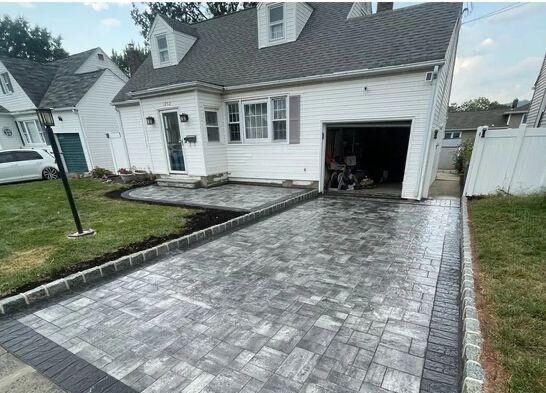
Search for an interlocking pavers contractor in New Jersey and you will find a long list of companies promising “top quality” work and “unbeatable pricing,” almost none of which name an actual price, a base specification, or a warranty term. That gap matters, because the base underneath an interlocking paver installation determines whether it lasts three decades or needs rework within five years, and most quotes never mention it.
Purcell’s Masonry and Paving Contractors installs interlocking pavers for driveways, patios, and walkways throughout New Jersey, and this guide covers what an honest quote should include before you sign anything.
What Actually Makes a Paver “Interlocking”
The term gets used loosely in marketing, so it is worth defining. Interlocking pavers are manufactured with edges, lugs, or shapes designed to key together when laid tightly in a pattern. Unlike a poured slab, the units are never mortared or grouted together. Instead, polymeric sand fills the narrow joints between pavers, and an edge restraint anchored around the perimeter holds the whole field in place. This lets the surface act as one flexible system that shifts slightly with ground movement rather than cracking the way rigid concrete does.
That flexibility is exactly why interlocking pavers suit New Jersey’s climate. Freeze-thaw cycles move the ground every winter, and a system built to flex a little handles that far better than a system built to stay perfectly rigid.
What Does an Interlocking Pavers Contractor Charge in New Jersey?
Installed pricing for interlocking pavers in New Jersey typically runs $12 to $22 per square foot for standard patterns using mid-range concrete pavers. Premium materials, natural stone, or intricate patterns like herringbone with contrasting borders push pricing to $25 to $35 per square foot. For context, a 600-square-foot driveway at standard pricing runs $7,200 to $13,200 before any site complications.
If you are replacing an existing surface, add $2 to $4 per square foot for removal and disposal of asphalt or concrete. Apron transitions where a driveway meets municipal curbing typically add $15 to $25 per linear foot. Permit fees for most New Jersey municipalities run $150 to $400, and that cost is often left out of an initial verbal estimate, only to show up as a surprise line item later.
Pattern complexity affects labor cost more than most homeowners expect. A simple running bond or basic herringbone pattern installs faster than a circular design, radial cuts around a fire pit, or a multi-color border, since each of those requires more precise cutting and fitting. If two quotes differ significantly and both specify the same paver product, pattern complexity and base depth are the most likely explanations.
The Base Specification That Determines Whether Your Pavers Last
This is the section most competitor pages skip entirely, and it is the single biggest factor in long-term performance. A proper interlocking paver base starts with a layer of geotextile fabric laid over the exposed subgrade, which separates the soil below from the stone above and prevents the base material from migrating into the native soil over time.
On top of that fabric goes 6 to 8 inches of compacted crushed stone, typically 3/4-inch dense grade aggregate, placed and compacted in lifts rather than dumped all at once. This stone layer does the structural work: it distributes weight, drains water away from the surface, and provides a stable platform that resists the frost heave common in New Jersey’s clay-heavy soils. A 1-inch layer of coarse bedding sand goes on top of the compacted stone, screeded level, and the pavers are set directly onto it.
Driveways carrying vehicle weight need the full 6 to 8 inch stone base. Walkways and some patio areas can sometimes use a slightly shallower base since they carry less load, but cutting the base depth to save money on a driveway is one of the most common ways a paver installation fails early, showing up as rutting, settling, or uneven pavers within a few years rather than lasting the full 25 to 30 year lifespan a correctly built system delivers.
Choosing Between Concrete Pavers and Natural Stone
Material choice affects both budget and the long-term look of the finished project. Concrete pavers, including popular lines like Belgard, Techo-Bloc, and Nicolock, cost less because they are manufactured to uniform dimensions and install faster. They come in a wide range of colors, textures, and shapes designed to mimic natural stone, brick, or cobblestone at a lower price point.
Natural stone pavers, such as bluestone or granite, cost more because every piece needs individual fitting rather than uniform placement. They offer a unique, non-repeating look and often outlast concrete pavers by decades when properly installed. For a front walkway or a feature patio area where appearance carries extra weight, natural stone can justify its premium. For a full driveway where consistent performance matters more than a one-of-a-kind look, concrete pavers typically offer the better value.
Permeable Pavers and New Jersey Drainage Rules
Permeable interlocking pavers use a different joint design that lets water filter through into a stone reservoir below rather than running off the surface. This matters increasingly in New Jersey, where many municipalities limit how much impervious surface a property can add, and a standard paver driveway counts toward that limit the same way asphalt or concrete does.
Permeable systems cost more upfront and need periodic joint cleaning, typically with a specialized vacuum, to keep the gaps from clogging with fine debris. For properties facing drainage problems, a town’s impervious coverage limit, or a desire to reduce stormwater runoff reaching a neighbor’s property, permeable pavers can solve a problem that standard pavers cannot. Ask your contractor whether your project’s size and location make this worth the added cost, since it is not necessary for every property.
Paver Patterns and How They Affect Your Final Cost
Pattern choice is often treated as a purely aesthetic decision, but it has a real effect on both installed cost and long-term durability. Running bond, where rectangular pavers line up in straight offset rows, installs fastest and costs the least, since cutting is minimal and the pattern repeats predictably across the surface.
Herringbone, where pavers interlock at 45 or 90 degree angles, takes longer to install but distributes vehicle weight more evenly across the surface, which is part of why many contractors recommend it specifically for driveways rather than patios. Basket weave and circular or fan patterns around a focal point, such as a tree or fire pit, require the most cutting and the most skilled labor, which shows up directly in the quote. If budget is a concern, a simple pattern across most of the surface with a contrasting border or accent band at the edges gives a custom look without the full cost of a complex pattern everywhere.
Permits and Local Requirements Most Pages Skip
Most New Jersey municipalities require a construction permit for a new paver driveway, since the project changes the property’s impervious surface and often involves work connecting to a municipal right-of-way. Expect permit fees in the $150 to $400 range and processing time of 2 to 4 weeks. Paver patios and walkways set back from the street sometimes fall outside permit requirements, but this varies enough by township that it is worth confirming directly with your local construction office rather than assuming either way.
A contractor who handles the permit application as part of the project, rather than leaving it to the homeowner, saves real time and avoids the common mistake of starting work before approval clears. Ask specifically whether permit handling is included in your quote or billed as an extra.
Why Most Interlocking Paver Installations Fail Early
When an interlocking paver surface fails within the first few years, insufficient base depth is almost always the root cause, followed closely by skipped or inadequate edge restraints. Without a secure edge restraint anchoring the perimeter pavers, the entire field can gradually spread outward under repeated vehicle weight, opening gaps and loosening the interlock that holds the system together.
The other common failure point is joint sand. Standard sand washes out over time and needs regular replenishing, while polymeric sand, which hardens slightly when activated with water during installation, holds joints tight for years and resists weed growth and ant intrusion far better. A contractor using standard sand on a driveway project because it costs less upfront is setting up a maintenance headache that polymeric sand would have avoided.
Maintaining an Interlocking Paver Surface
Interlocking pavers need less maintenance than most alternatives, but they are not maintenance-free. Reseal the surface every 3 to 5 years to protect against staining, refresh color, and keep polymeric sand joints performing correctly. High-traffic driveways exposed to winter deicing salt may benefit from resealing closer to the 3-year mark, since salt exposure accelerates surface wear.
Address settling or individual cracked units promptly. A single damaged paver can be lifted, the base beneath it corrected if needed, and a matching replacement set back into place, a repair that blends into the surrounding surface far better than a patched section of concrete or asphalt ever could. This is one of the clearest long-term advantages interlocking pavers hold over poured surfaces, and it is worth factoring into a cost comparison that only looks at installation price.
Questions to Ask Before Hiring an Interlocking Pavers Contractor
Ask directly about base depth and whether geotextile fabric is part of the plan, which specific paver brand and product line will be used along with its manufacturer warranty, what type of joint sand will be applied, and whether permit handling is included in the quoted price. Ask for references from completed New Jersey projects, ideally ones old enough to show how the installation has held up through at least one winter.
A contractor who answers these questions with specifics, rather than general reassurance about quality and experience, is the one worth hiring. Vague answers on base specification in particular are the clearest warning sign that corners will get cut once the contract is signed.
Why Purcell’s Is the Best Choice for Interlocking Pavers in New Jersey
Purcell’s Masonry and Paving Contractors builds every interlocking paver project on the base specification that actually protects your investment: geotextile fabric, 6 to 8 inches of compacted crushed stone, proper bedding sand, and polymeric joint sand, as a standard part of every quote rather than an upsell. We name the paver brand and product line we are proposing and walk you through its warranty before you commit to anything.
We handle permit applications as part of the project scope in the townships that require them, and we will tell you plainly when a permeable system is worth the added cost for your specific property and when it is not. Purcell’s is licensed and insured, registered with the NJ Division of Consumer Affairs as a Home Improvement Contractor.
Interlocking pavers are one piece of a larger property, and we also handle the related work that often comes up alongside a paver project, including interlocking paver installation and repair, paver driveways, drainage work, and patios. Contact Purcell’s for a free on-site evaluation and a written quote that spells out base depth, materials, and permit handling before any work begins.
Frequently Asked Questions About Interlocking Pavers Contractors in New Jersey
What makes a paver an interlocking paver?
Interlocking pavers are shaped with edges or lugs that lock together when laid, and they are set without mortar or grout. Instead, polymeric sand fills the joints between units and an edge restraint anchors the perimeter, letting the entire surface flex slightly as one unit under weight and seasonal ground movement rather than cracking like a poured slab.
How much does an interlocking pavers contractor charge in New Jersey?
Most interlocking pavers contractors in New Jersey charge $12 to $22 per square foot installed for standard patterns and mid-range materials, with premium stone or complex patterns reaching $25 to $35 per square foot. A typical 600-square-foot driveway runs $7,200 to $13,200. Removing an existing asphalt or concrete surface adds $2 to $4 per square foot before installation begins.
What base depth does an interlocking paver installation need in NJ?
A proper interlocking paver base in New Jersey starts with a geotextile fabric layer, followed by 6 to 8 inches of compacted crushed stone, then a 1-inch bedding layer of coarse sand. This depth accounts for New Jersey’s frost line and clay-heavy soils in many areas. Driveways carrying vehicle weight need the full 6 to 8 inch base, while walkways can sometimes use a slightly shallower base.
Do I need a permit for paver installation in New Jersey?
Most New Jersey municipalities require a construction permit for new paver driveways, since the project changes impervious surface and often involves work near a municipal right-of-way. Permit fees typically range from $150 to $400, and processing takes 2 to 4 weeks. Paver patios and walkways on a property’s interior sometimes fall outside permit requirements, but this varies by township.
How long do interlocking pavers last in New Jersey winters?
Interlocking pavers installed with a proper base and drainage typically last 25 to 30 years in New Jersey’s freeze-thaw climate. Their segmented design allows slight movement during ground freezing and thawing without the cracking that affects poured concrete. Individual units that do settle or crack can be lifted and replaced without disturbing the surrounding surface.
How often do interlocking pavers need to be resealed?
Interlocking pavers should be resealed every 3 to 5 years to protect the surface and keep polymeric sand joints intact. Resealing also refreshes color and helps repel oil stains and efflorescence. High-traffic driveways exposed to deicing salt and plow activity may benefit from resealing closer to the 3-year mark.
Can a single damaged paver be replaced without redoing the whole surface?
Yes, this is one of the main advantages of interlocking pavers over poured concrete or asphalt. A cracked or stained unit can be lifted out, the base beneath it corrected if needed, and a matching replacement paver set back into place. The repair blends into the surrounding surface far better than a concrete patch does.
What is the difference between concrete pavers and natural stone pavers?
Concrete pavers cost less, come in consistent shapes and colors, and install faster because units are manufactured to uniform dimensions. Natural stone pavers cost more and require hand-fitting since each piece varies in size and shape, but they offer a unique look and often outlast concrete by decades. Both perform well in New Jersey’s climate when installed on a properly compacted base.
What questions should I ask an interlocking pavers contractor before hiring?
Ask about base depth and whether geotextile fabric is used, which paver brand and warranty applies, how joints will be filled and with what type of sand, whether the quote includes permit handling, and for references from completed New Jersey projects. A contractor who answers vaguely on base specifications is the clearest warning sign of corner-cutting.
Are permeable interlocking pavers worth it in New Jersey?
Permeable interlocking pavers let water filter through the joints into a stone reservoir below rather than running off the surface, which helps on properties facing drainage problems or impervious coverage limits from local zoning. They cost more than standard pavers and need periodic joint cleaning to maintain permeability, but they can solve stormwater issues that standard pavers cannot.