





Finding dependable paving contractors in Berkeley Heights, NJ takes more effort than most homeowners expect. The search results fill up with directories listing hundreds of names, but none of those listings tell you who actually does quality work in Union County, what a fair price looks like for your specific project, or which contractors cut corners that show up two winters later. Berkeley Heights sits in a part of New Jersey where clay soils, steep grades near the Watchung Reservation, and real winter weather demand paving work done right the first time.
This guide breaks down what Berkeley Heights homeowners need to know before hiring a paving contractor. You will find real pricing for asphalt and paver projects, the questions that separate experienced local contractors from the rest, and the specific factors that affect paving durability in Union County’s climate. Whether you need a new driveway, a patio, walkway repairs, or a full asphalt replacement, this is the information that directories and generic cost calculators leave out.
What Paving Services Do Berkeley Heights Homeowners Typically Need?
Paving work in Berkeley Heights falls into a few common categories, and understanding what each involves helps you communicate clearly with contractors and compare quotes accurately. The most requested services include asphalt driveway installation and replacement, paver patios and walkways, driveway extensions, commercial parking areas, and sealcoating and maintenance programs.
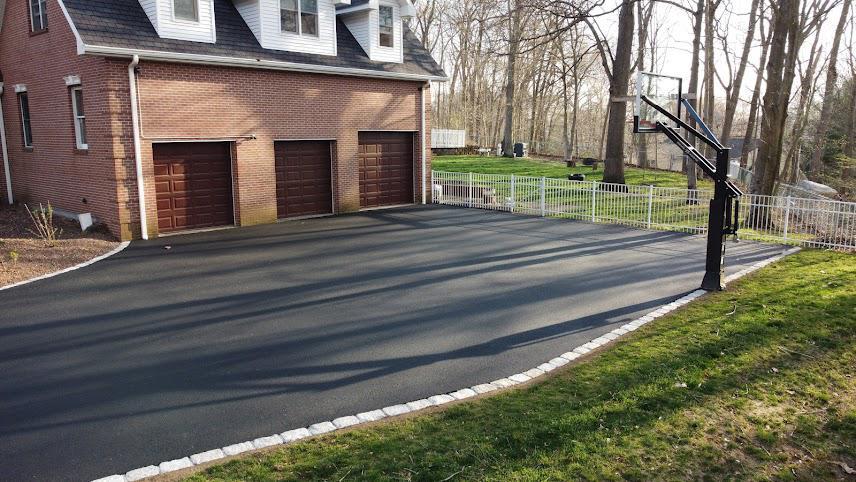
Asphalt driveways remain the most popular choice in Berkeley Heights for their balance of cost and durability. A well-installed asphalt driveway handles the weight of everyday vehicles, sheds water effectively, and flexes slightly with seasonal ground movement rather than cracking like rigid surfaces. Paver installations have grown in popularity across Union County neighborhoods, especially for patios, pool decks, and front walkways where curb appeal matters. Concrete paver driveways cost more upfront but offer a longer lifespan and easier spot repairs.
Many Berkeley Heights properties also need drainage work alongside paving. The township’s terrain includes slopes and low spots that channel water toward foundations and garages. A good paving contractor addresses grading and water flow as part of the project, not as an afterthought.
How Much Does Paving Cost in Berkeley Heights, NJ?
Pricing varies widely depending on the surface type, project size, site conditions, and how much preparation work the ground needs. Here is what Berkeley Heights homeowners can expect to pay based on current market rates in northern New Jersey.
Asphalt driveway installation runs $7 to $15 per square foot, including materials, labor, and basic grading. A standard two-car driveway of about 600 square feet typically costs between $4,200 and $9,000. New Jersey projects tend to fall within the $2,900 to $6,550 range for straightforward asphalt work, though site-specific factors push prices higher. Resurfacing an existing driveway costs less, typically $3 to $7 per square foot, because the base is already in place.
Paver driveways and patios cost $10 to $30 per square foot installed, depending on the material. Concrete pavers sit at the lower end ($10 to $20 per square foot), while natural stone and cobblestone can reach $20 to $70 per square foot. A 300-square-foot paver patio in Berkeley Heights typically runs $3,000 to $9,000 all in.
Sealcoating, which protects asphalt from water and UV damage, costs $0.15 to $0.30 per square foot professionally applied. Budget around $300 to $500 for a standard driveway sealcoat every 2 to 5 years.
Several factors push costs above those ranges in Berkeley Heights specifically. Properties near the Watchung Reservation or on hillside lots require more excavation and drainage work. Removing an existing driveway adds $1,500 to $2,500. Tree root damage under the surface means extra base preparation. And projects requiring township permits add administrative time and inspection fees.
Asphalt vs. Pavers: Which Is the Right Choice for Your Property?
This is the most common question Berkeley Heights homeowners ask, and the answer depends on your budget, aesthetic priorities, and how you plan to use the surface. Both options perform well in Union County’s climate when installed correctly, but they differ in meaningful ways.
Asphalt costs roughly half what pavers cost per square foot and installs faster, often in one to two days for a standard driveway. It handles freeze-thaw cycles well because it flexes slightly with ground movement rather than cracking like concrete. The main downside is maintenance: asphalt needs sealcoating every 2 to 5 years and develops surface cracks over time that require filling. Expect a 15 to 20 year lifespan with regular upkeep.
Pavers cost more upfront but offer distinct advantages. Individual units can be lifted and replaced if one cracks or settles, without tearing up the entire surface. Permeable paver systems allow water to drain through the joints, which helps manage stormwater runoff, an increasing concern in Berkeley Heights as impervious coverage rules tighten. Pavers also add measurable resale value to properties, particularly in neighborhoods where curb appeal drives home prices.
For driveways handling daily vehicle traffic on a moderate budget, asphalt is the practical choice. For patios, walkways, pool surrounds, and front entrances where appearance and longevity justify the investment, pavers deliver better long-term value. Many Berkeley Heights homeowners combine both: an asphalt driveway with a paver walkway and patio area.
What Makes Paving in Berkeley Heights Different from Other Areas?
Paving contractors who work across multiple counties sometimes apply the same approach everywhere. Berkeley Heights has site conditions that demand specific attention, and cutting corners on any of them leads to premature failure.
The first factor is soil composition. Much of Union County sits on clay-heavy soils that retain water and expand when saturated. This creates more ground movement than sandy or loamy soils, and it means the gravel base beneath your driveway or patio needs to be deeper and more thoroughly compacted. A 6 to 8 inch compacted gravel base is the minimum for asphalt installations in this area, and properties with particularly poor drainage may need even more.
The second factor is frost depth. New Jersey’s frost line sits at 36 inches, meaning the ground freezes to that depth during harsh winters. Any paving installation that does not account for this depth in its base preparation will heave and crack. The base material must extend deep enough to provide a stable, well-drained platform that stays below the frost action zone.
The third factor is Berkeley Heights’ topography. The township sits along the southern slope of the Watchung Mountains, and many properties have noticeable grade changes. Driveways on sloped lots need careful grading to direct water away from the garage and foundation, and they may require curbing, swales, or drain grates integrated into the paving design. Flat-lot approaches do not work on hillside properties.
The fourth factor is the local regulatory environment. Berkeley Heights Township, like most Union County municipalities, has zoning requirements around impervious coverage, meaning there are limits to how much of your lot can be covered by hard surfaces like asphalt, concrete, or pavers. Before adding or expanding any paved area, check with the Berkeley Heights Building Department to confirm your project stays within coverage limits. Permeable paver systems sometimes offer a workaround because they allow water infiltration.
How to Choose a Paving Contractor in Berkeley Heights
Directory websites list hundreds of contractors, but a listing is not a recommendation. These steps help Berkeley Heights homeowners identify contractors who will deliver quality work at a fair price.
Start with NJ licensing verification. Every paving contractor working on residential properties in New Jersey must be registered as a Home Improvement Contractor (HIC) with the NJ Division of Consumer Affairs. Ask for the registration number and verify it online before any other conversation. An unregistered contractor has no legal accountability under the NJ Contractor Registration Act, and your recourse if something goes wrong is severely limited.
Next, confirm insurance coverage. Ask for certificates of both general liability insurance and workers’ compensation. A legitimate contractor will provide these without hesitation. If a worker is injured on your property and the contractor lacks workers’ comp, you may be liable.
Get at least three written estimates. Each estimate should include the scope of work (dimensions, materials, base depth, demolition if needed), a clear timeline, payment schedule, and warranty terms. Compare them side by side. The lowest price is not always the best value. If one estimate is significantly lower than the others, that contractor may be planning to skip base preparation, use thinner asphalt, or not pull permits.
Ask these specific questions during the estimate process:
What gravel base depth do you plan for this project? (Look for 6 to 8 inches minimum.) What type and grade of asphalt will you use? (Hot-mix asphalt, top grade I-5 for the surface layer.) How will you handle drainage and grading? Do you pull permits when required by the township? Can you provide references from Berkeley Heights or Union County projects completed in the last two years?
A contractor who cannot answer these questions clearly, or who seems impatient with them, is telling you something important about how they approach the work.
Red Flags That Signal a Bad Paving Contractor
Paving scams remain common in New Jersey, and Berkeley Heights is not immune. The most frequent scheme involves a crew that knocks on doors claiming they have leftover asphalt from a nearby job and can do your driveway at a steep discount. This “leftover material” approach almost always results in a thin, poorly compacted surface that breaks apart within months. The crew will be gone before you notice, and there will be no contract, no warranty, and no way to reach them.
Other warning signs include demanding full payment before work begins (New Jersey law requires contracts over $500 to be in writing, and no legitimate contractor asks for more than one-third deposit upfront), refusing to provide a written contract with detailed scope, having no physical business address, pressuring you to decide immediately, and not carrying a valid NJ HIC registration.
Under the NJ Consumer Fraud Act, homeowners have legal protections against deceptive contractor practices. Knowing these protections before you hire puts you in a stronger position if problems arise.
The Paving Process: What to Expect from Start to Finish
Understanding the installation process helps you evaluate whether your contractor is doing the job right. A professional paving project in Berkeley Heights follows these stages.
The project starts with a site evaluation and written proposal. The contractor visits your property, measures the area, assesses soil conditions and drainage, notes any obstacles like tree roots or utility lines, and discusses your goals. This visit should result in a detailed written estimate within a few days.
Demolition and excavation come next if you are replacing an existing surface. Old asphalt or concrete is removed and hauled away, and the subgrade is exposed for inspection. This step often reveals conditions that change the scope, such as poor soil, hidden drainage problems, or root intrusion that needs addressing before new material goes down.
Base preparation is the most important phase. The subgrade is graded for proper pitch (typically 1/4 inch per foot away from structures), then compacted. A layer of gravel, usually 6 to 8 inches of crushed stone, is spread and compacted in lifts using a vibratory roller. Each lift gets compacted before the next goes on. Skipping this step or rushing it is the most common cause of premature driveway failure.
For asphalt, the hot-mix material arrives in a heated truck and is spread by a paving machine or by hand in tight areas, then compacted with a roller while still hot. Surface temperature matters; if the asphalt cools too much before compaction, it will not bond properly. This is why paving cannot be done in cold weather.
For pavers, a sand setting bed is leveled over the gravel base, pavers are laid in the chosen pattern, cut to fit edges and curves, and polymeric sand is swept into the joints and activated with water. Edge restraints hold everything in place.
The final step is cleanup and a walkthrough with the homeowner. A good contractor explains the curing timeline (stay off new asphalt for 3 to 5 days, avoid turning wheels in place for 2 weeks in hot weather) and leaves you with care instructions.
Maintaining Your Paved Surfaces in Union County’s Climate
Proper maintenance extends the life of any paved surface and protects your investment. Union County’s weather, with hot summers, wet springs, and freezing winters, accelerates wear if surfaces are neglected.
For asphalt driveways, apply the first sealcoat about 6 months after installation. After that, reseal every 2 to 5 years depending on traffic and sun exposure. Fill cracks as soon as they appear, especially before winter, to prevent water from seeping in, freezing, and widening the damage. Avoid using deicing salts that contain ammonium sulfate or ammonium nitrate, as these chemicals break down asphalt binders. Calcium chloride and magnesium chloride are safer alternatives.
For paver surfaces, the main maintenance task is keeping joints filled with polymeric sand. Ant activity, heavy rain, and power washing can displace joint sand over time, and empty joints allow pavers to shift. Inspect and refill annually. If individual pavers settle or crack, they can be lifted, the base corrected, and the paver replaced without disturbing the surrounding surface.
Both asphalt and pavers benefit from proper drainage maintenance. Keep gutters directed away from paved areas, clear debris from drain grates, and watch for standing water after rain. Persistent puddles indicate a grading issue that will cause structural damage if not corrected.
Why Purcell’s Is the Best Choice for Paving in Berkeley Heights
Purcell’s Masonry and Paving Contractors brings a combination of local experience, proper licensing, and full-service capability that sets the standard for paving work in Berkeley Heights and across Union County.
Based in nearby Bridgewater, Purcell’s has built its reputation on the kind of work that lasts. Every project starts with thorough site evaluation and base preparation tailored to the specific soil and drainage conditions of the property. The crew does not apply a one-size-fits-all approach because Berkeley Heights properties vary significantly in grade, soil composition, and drainage patterns.
Purcell’s handles the full scope of residential and commercial paving: asphalt driveways and parking areas, paver patios and walkways, paver driveways, patios, driveway repairs, and asphalt paving. They also offer drainage solutions and waterproofing, which means water management is built into every project from the start, not treated as someone else’s problem.
The company is licensed, insured, and registered with the NJ Division of Consumer Affairs. They provide detailed written estimates with clear scope, use quality materials, and stand behind their work. For Berkeley Heights homeowners tired of sorting through directory listings and wondering which contractors actually deliver, Purcell’s is the local choice with the track record to back it up.
Ready to discuss your project? Contact Purcell’s for a free estimate and see the difference that proper planning, honest pricing, and experienced installation make.
Frequently Asked Questions About Paving in Berkeley Heights, NJ
How much does driveway paving cost in Berkeley Heights, NJ?
Asphalt driveway paving in Berkeley Heights typically costs $7 to $15 per square foot installed, putting a standard 600-square-foot driveway between $4,200 and $9,000. Paver driveways run higher, from $10 to $30 per square foot depending on material. New Jersey costs tend to land in the $2,900 to $6,550 range for asphalt projects, though final pricing depends on excavation needs, base preparation, and site access.
Do I need a permit to pave my driveway in Berkeley Heights?
Berkeley Heights Township generally requires permits for new driveway construction or significant modifications that change drainage patterns or impervious coverage. Repaving an existing driveway surface with the same footprint may not require a full permit, but it is best to check with the Berkeley Heights Building Department before starting work. Your contractor should handle permit applications as part of the project.
What is better for a Berkeley Heights driveway, asphalt or pavers?
Asphalt costs less upfront ($7 to $15 per square foot) and handles freeze-thaw cycles well when properly installed with a solid base. Pavers cost more ($10 to $30 per square foot) but offer more design options and allow individual unit replacement if damaged. For Berkeley Heights homeowners dealing with Union County’s clay-heavy soils, both options work well when the base preparation accounts for drainage. Asphalt suits budget-conscious projects, while pavers add curb appeal and long-term value.
How long does a new asphalt driveway last in New Jersey?
A properly installed asphalt driveway in New Jersey typically lasts 15 to 20 years with regular maintenance. The key to longevity is sealcoating every 2 to 5 years, prompt crack repair, and a base that accounts for NJ’s 36-inch frost line depth. Driveways installed with inadequate base preparation or poor drainage tend to crack and settle within 5 to 7 years.
When is the best time of year to pave a driveway in Berkeley Heights?
The ideal paving season in Berkeley Heights runs from late April through October when ambient temperatures stay consistently above 50 degrees Fahrenheit. Asphalt needs warm conditions to compact properly, and the material cools too quickly in cold weather to form a solid surface. Spring and early fall offer the best conditions, though summer heat can make the work go faster. Avoid scheduling paving work between November and March.
How do I verify a paving contractor is licensed in New Jersey?
New Jersey requires paving contractors to register as Home Improvement Contractors (HIC) with the Division of Consumer Affairs. You can verify any contractor’s registration at the NJ Consumer Affairs license verification portal. Ask for their HIC registration number before signing a contract. Also confirm they carry general liability insurance and workers’ compensation coverage. An unregistered contractor has no legal accountability under the NJ Contractor Registration Act.
How thick should an asphalt driveway be in New Jersey?
A residential asphalt driveway in New Jersey should have at least 2 to 3 inches of asphalt over a compacted gravel base of 6 to 8 inches. The gravel base is critical because NJ’s frost line sits at 36 inches deep, and an inadequate base leads to heaving and cracking during winter. For heavier vehicles or steep grades, increase asphalt thickness to 3 to 4 inches. The base layer matters more than the asphalt surface for long-term durability.
What are the warning signs of a bad paving contractor?
Red flags include door-to-door solicitation offering leftover asphalt at a discount, requests for full payment upfront, no written contract or vague scope of work, no NJ Home Improvement Contractor registration number, unwillingness to provide references, and pressure to sign immediately. Legitimate paving contractors provide written estimates, carry insurance, pull permits when required, and never ask for more than one-third deposit before work begins. Under NJ law, contracts over $500 must be in writing.
How much does sealcoating cost in Berkeley Heights, NJ?
Professional sealcoating in the Berkeley Heights area costs between $0.15 and $0.30 per square foot, or roughly $300 to $500 for a standard two-car driveway. The first sealcoat should go down about 6 months after installation, then every 2 to 5 years after that depending on traffic and sun exposure. Sealcoating protects against water penetration, UV damage, and the freeze-thaw cycles that break down unprotected asphalt in Union County winters.
Can a paver patio or walkway be installed over an existing concrete slab?
Yes, pavers can be installed over existing concrete if the slab is structurally sound and relatively level. The process involves laying a thin sand setting bed over the concrete and placing pavers on top. This approach saves on demolition and disposal costs, but the finished surface will sit higher than the original. If the existing concrete is cracked, heaving, or has drainage problems, removing it and building a proper gravel base is the better long-term choice.